This category has a specific problem. Results take months, they are gradual, and they are heavily influenced by things that have nothing to do with the product — the season, your sun exposure, your hormones. That makes it unusually hard to tell whether something is working, which makes it unusually easy to sell something that isn't.
Here is how we assess anything in this category before it goes anywhere near a face.
1. Does it name its concentrations?
The most informative thing on any pigmentation product is whether it tells you how much of the active it contains.
Ingredients lists are ordered by concentration down to 1%, after which order means nothing. So an active appearing near the end could be at 0.9% or at 0.0001%, and both look identical on the label. Everything after the preservatives and fragrance is effectively unquantified.
Brands that have invested in meaningful concentrations tend to say so, because it is a selling point. Silence is not proof of a weak formula, but it removes your ability to check — and across a category this noisy, that is enough reason to prefer the ones that disclose.
2. Is the active one with real backing?
Cross-reference against what actually has clinical support: hydroquinone, tranexamic acid, azelaic acid, retinoids, cysteamine, and to a lesser degree niacinamide and vitamin C. We covered the evidence for each in our ingredients breakdown.
Be sceptical of products whose hero ingredient is a botanical extract with an impressive-sounding mechanism. Plenty of things inhibit tyrosinase in a petri dish. Very few have been shown to do it on a human face at the concentration in the bottle.
3. Does the packaging protect the formula?
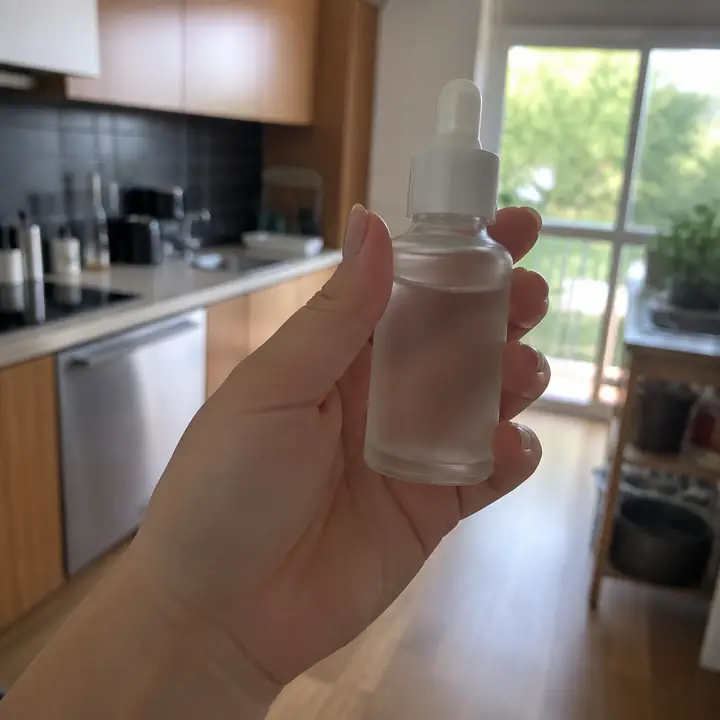
This sounds like a detail and isn't. Vitamin C and retinoids both degrade on exposure to light and air. A clear dropper bottle of L-ascorbic acid is losing potency from the day it is opened, and an oxidised serum — visibly yellowing to brown — is inert.
Opaque, airless, pump-dispensed packaging is a signal that someone thought about stability. A clear jar you dip your fingers into is the opposite signal.
4. What is the cost per use, not the sticker price?
A £90 serum in a 50 ml bottle used once daily is cheaper per application than a £35 serum in a 15 ml bottle. Given that these products need three months minimum to assess and ongoing use to maintain, the per-use figure is the one that actually describes what you'll spend.
Divide price by millilitres, then think about how much you'll use per application. This alone reorders most category rankings substantially.
5. What is the claim, precisely?
Regulated claims and marketing claims read similarly and mean very different things. Watch the specific wording:
- "Reduces the appearance of dark spots" — a cosmetic claim about visual appearance. Can be satisfied by anything that adds radiance or evens tone optically.
- "Clinically proven" — meaningless without knowing the study. Proven to do what, in how many people, against what comparator, over how long? A 12-person open-label study with no control group is technically clinical.
- "Dermatologist tested" — means a dermatologist was involved in testing. It does not mean they found it effective, or that they recommend it.
- "Up to 73% improvement" — "up to" describes the best responder, not the average one. The average is the number that matters and it is rarely the one printed.
None of these are lies. They are just weaker than they sound, and the weakness is the point of the phrasing.
6. Is the timeline plausible?
Skin turnover takes roughly four to six weeks, slowing with age. Reducing visible pigment requires existing pigmented cells to shed and be replaced by less pigmented ones. That is a two-cycle process at minimum.
Any product promising visible dark-spot reduction in seven or fourteen days is describing hydration, light-reflecting particles, or a temporary tint. Those aren't worthless — but they aren't pigment reduction, and they stop the moment you stop.
7. Do the before-and-after photos hold up?
Look at the photographs rather than the results. Check whether the lighting is identical, the angle is identical, the expression is the same, and whether makeup has appeared between shots. Changes in any of those produce dramatic apparent differences with no actual change in pigment.
Consistent, unflattering, identically-lit photographs are a better sign than glossy ones. If the "after" is better lit than the "before", you are looking at photography.
8. What is the return policy?
Given that a fair trial takes 8–12 weeks, a 30-day return window means you cannot get your money back on a product that didn't work — you'll still be inside the period where nothing was going to be visible anyway.
Longer guarantees are a genuine signal. A brand offering 90 days either has confidence in the formula or has calculated that few people will bother — but either way you are the one with the option.
The short checklist
- Concentration disclosed?
- Active with real clinical backing?
- Packaging that protects it?
- Sensible cost per use, not per bottle?
- Claims that survive reading twice?
- Timeline of months, not days?
- Honest photography?
- Return window longer than the trial period?
Score anything against those eight and most of the category sorts itself out quickly. The expensive products that pass are usually worth it. The expensive ones that fail are paying for packaging — and there are cheap ones that pass all eight.
Worth remembering: no product in this category outperforms consistent daily light protection. If the budget is tight, spend it on a tinted broad-spectrum sunscreen you'll actually reapply before spending it on a serum.